
2026-11-02 ·
How Often Should You Pump a Septic Tank in Texas?
# How Often Should You Pump a Septic Tank in Texas?
For most households in Nacogdoches, septic tank pumping should happen every 3 to 5 years. A smaller household with a larger tank may stretch toward the longer end, while a larger family or a smaller tank may need service sooner. The exact interval depends on tank size, household size, water use, and how much solid waste enters the system. Based in Nacogdoches, TX, we serve homeowners across Nacogdoches County and nearby East Texas areas, and we have seen that following a regular schedule is far easier than recovering from a neglected system.
How Nacogdoches Climate and Soil Shape Pumping Schedule
East Texas weather puts real pressure on septic systems. Nacogdoches sees hot humid summers and mild winters, with significant rainfall throughout the year. The area's clay soil drains slowly and can stay saturated after heavy rain, which affects how the drain field absorbs treated wastewater. During wet periods, tanks may fill faster and drains may slow because the soil cannot take in effluent as quickly. For this reason, many homeowners schedule pumping before the wetter months to ensure the system has capacity when it needs it most. Clay soil also means solids settle and compact differently than in sandy soil, so regular inspections help track sludge levels accurately.
Warning Signs Your Tank Is Due for Pumping
Waiting for a backup is the most expensive way to learn a tank is full. Watch for these indicators:
- Slow drains in sinks, showers, and toilets across the house
- Gurgling sounds from plumbing after flushing or running water
- Sewage odors near the tank lid or drain field
- Standing water or unusually lush grass over the drain field
- Sewage backing up into lower-level drains or basement fixtures
In Nacogdoches, a slow drain in a University Heights rental might mean a clogged line, but when every drain in the house slows at once, the tank is likely the cause. If you notice these signs, schedule pumping promptly rather than waiting for the next routine interval.
What Happens During a Professional Pumping Visit
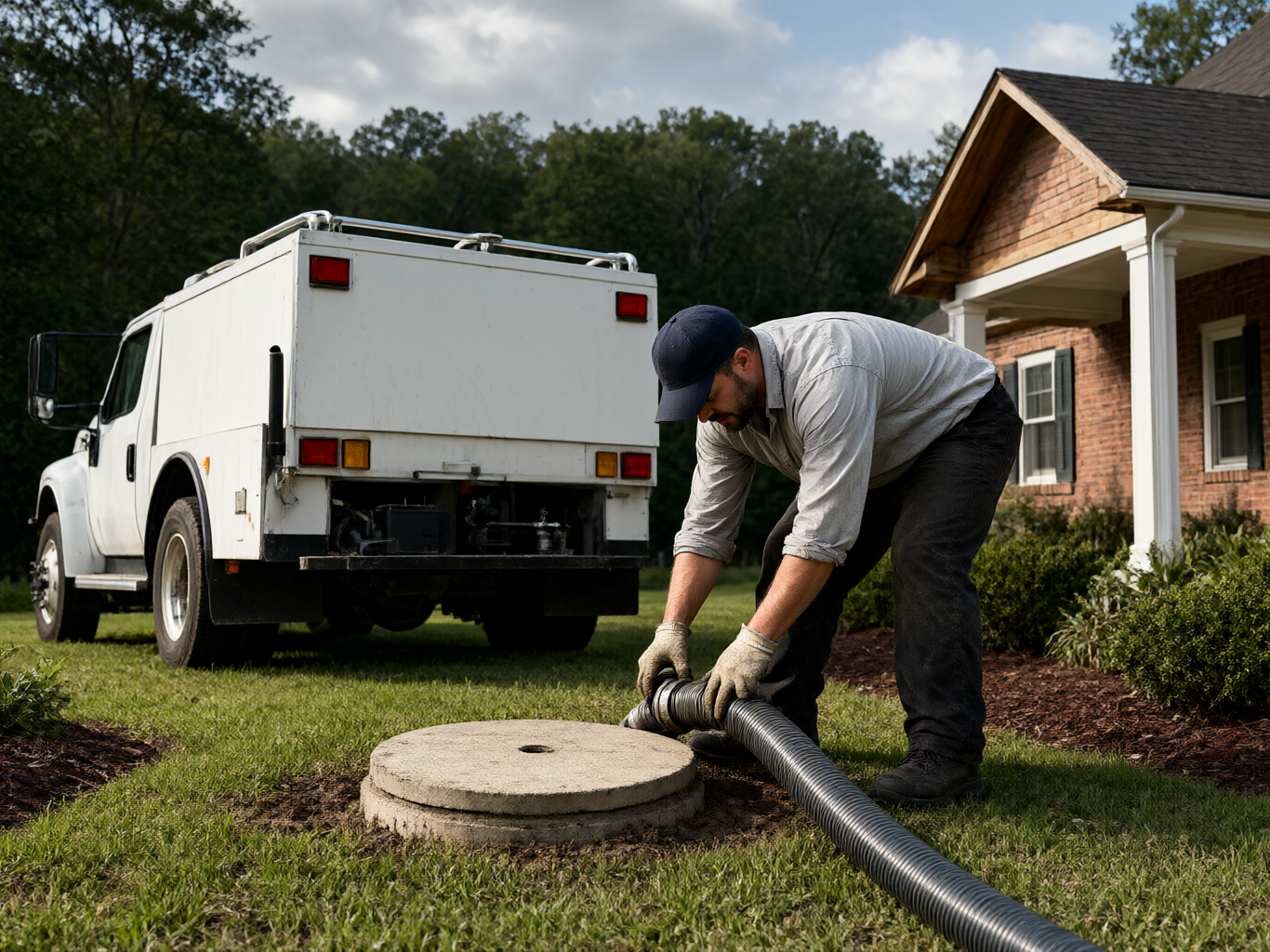
A standard septic tank pumping removes sludge and scum through the main access lid, not through a cleanout or inspection port. The technician locates the tank, uncovers the lid, measures sludge and scum layers, and then uses a vacuum truck to remove accumulated waste. The tank is inspected for cracks, baffle damage, and signs of deterioration while it is open. After pumping, the technician should provide a report noting sludge levels and any concerns found. Homeowners should keep this report for future reference and for buyers if the home is later sold. A typical visit takes 1 to 2 hours depending on tank access and condition.
Cost Factors and What to Expect
Pricing depends on tank size, access difficulty and travel distance. A 1,000-gallon tank with easy lid access generally involves less work than a 1,500-gallon tank buried under a patio or deck. Heavy sludge buildup may require extra time. Homes near Lufkin or Hudson are in the service area; travel depends on distance. Additional work, such as riser repair or line jetting, is handled separately. Getting an upfront quote before the truck arrives avoids surprises, and reputable operators will explain exactly what is included in the base pumping service.
Maintenance Steps Between Pumping Visits
You can extend the time between pumping visits with consistent habits. Spread laundry loads across the week rather than doing all loads on one day. Fix leaky faucets and running toilets promptly, as extra water fills the tank faster. Only flush human waste and toilet paper — wipes, feminine products, and grease belong in the trash. Avoid using garbage disposals heavily, since food waste adds solids that must be pumped out. Keep vehicles and heavy equipment off the tank and drain field to prevent damage to pipes and soil structure.
When to Call a Professional Instead of Waiting
Some situations require immediate service rather than waiting for the next scheduled pumping. Sewage backing up into the home, strong odors indoors, or standing sewage in the yard are emergencies that should be addressed right away. If you are buying or selling a home, a septic inspection can reveal whether pumping is needed before closing. New homeowners should locate their tank, find the last pumping date, and establish a schedule based on household size and tank capacity rather than guessing.
Sticking to a 3 to 5 year pumping schedule protects your drain field and avoids costly replacement down the road. Regular pumping is the simplest and most effective way to keep a septic system working reliably in Nacogdoches' challenging soil and climate conditions.
Frequently Asked Questions
Does a larger family need pumping more often? Yes. More people means more water and solids entering the tank, so a household of five or six may need pumping closer to every 3 years, while a couple may stretch toward 5 years.
Can I wait longer if I use less water? Low water use helps, but solids still accumulate. Even a low-use home should have sludge and scum measured regularly, because a full tank can damage the drain field without warning.
How does clay soil change the pumping schedule? Clay drains slowly and stays saturated after rain, so a full tank shows up sooner as slow drains. Regular measurements, rather than a fixed calendar alone, help set the right interval.
Should I pump before selling my home? Pumping before a sale gives buyers a clean record and a measured starting point. Pair it with an inspection that checks baffles, tank structure and the drain field.